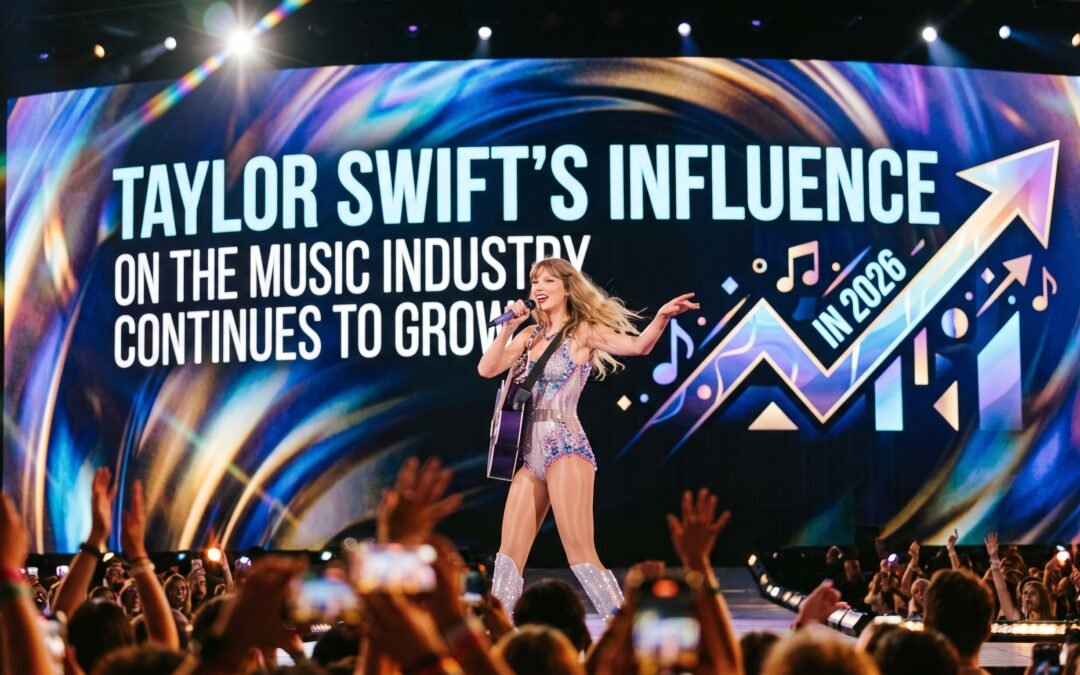
Taylor Swift’s Influence on the Music Industry Continues to Grow in 2026
There’s a reason industry analysts keep circling back to one name when they talk about where music is headed: Taylor Swift. Heading into 2026, her influence isn’t just about chart positions anymore — it’s about how the entire music business operates, from ticketing to streaming to how other artists plan their careers.
A Career Still Setting the Pace
Few artists manage to stay culturally relevant for over a decade, let alone keep expanding their reach. Swift has done both. Her ability to reinvent her sound across eras — while keeping a dedicated, highly engaged fanbase — has made her something closer to a business case study than a typical pop artist.
Music executives now study her release strategy, her re-recording project, and her direct-to-fan communication style as a blueprint, not an outlier.
Streaming and Sales Impact
Every major release continues to move the needle on platform-wide numbers:
- Streaming spikes that noticeably affect platform-level statistics, not just her own chart position
- Physical album sales proving vinyl and CDs still have commercial power when an artist drives demand
- Merchandise and ticket sales that ripple into local economies wherever her tours stop
This pattern has pushed other major labels to rethink how they plan release windows, avoiding direct competition with her album drops.
Changing How the Industry Talks About Artist Ownership
Swift’s re-recording of her earlier albums didn’t just make headlines — it sparked an industry-wide conversation about artists owning their masters. More musicians and their teams are now negotiating contracts with ownership terms in mind, something that was rarely a mainstream talking point before her public stance on the issue.
Setting New Standards for Fan Engagement
From surprise album drops to interactive elements in her rollout campaigns, Swift has helped normalize a level of fan engagement that other artists — and their marketing teams — now treat as a baseline expectation rather than a bonus.
What This Means Going Into the Rest of 2026
As the year continues, expect to see:
- Other artists adopting similar fan-first release strategies
- Continued industry discussion around artist ownership and royalties
- Streaming platforms adjusting algorithms and promotional slots around major artist-driven events
Taylor Swift’s influence in 2026 isn’t a moment — it’s a shift in how the modern music business operates, and the ripple effects are likely to shape the industry well beyond this year.